显示标签为“fishing hook”的博文。显示所有博文

2017年2月17日星期五

Do You Know How to Surf Fish?

Surf fishing is a kind of popular game fish all over the world, and many people fall in love with it. But you may ask that why I can’t catch as much fish as others. In my opinion, the main reason is that you know little about the skills of surf fishing. As we all know, different fishing styles have different skills, imagine if you use the skills of lake fishing to surf fishing, can you a successful surf fishing trip? Today, we will discuss the tips of surf fishing, and I hope it can be helpful for you.
surf fishing

Make a survey before fishing
No matter you are the first time to surf fish, or first time to fish in a new spot, you should take a walk along the beach at low tide, and make some notes:

   1. Make a note of where the gullies, hollows and banks are.
   2. Does the nature of the seabed change at all? Sand, shingle, mud...?
   3. Any sign of shellfish beds? Cockles, razor fish, mussels, etc?
   4. Any patches of weed and rough ground?
   5. Are there any tackle-robbing (but fish-attracting) obstructions you need to be aware of?
   6. Take this exploration one stage further by casting a bare lead (no hooks) from the low water mark. Bring it in slowly and you'll be able to feel changes in seabed conditions and contours.

Trust me, the data you get will make you have a wonderful surf fishing.

   Fishing tackles
   No matter what kind of fishing you like, appropriate fishing tackles are always playing an important role, and the gear you decide to use should be based on the target species you want to catch. For surf fishing, it's easy to get started with just a few rigs, some natural saltwater bait, and a surf rod and reel combo. Here are some tips for you to choose the fishing tackles:

   You can use lighter gear and shorter rods for smaller species, while larger species will require heavier gear and a longer rod. For example, you may want to use a 7 to 9-foot medium heavy fishing rod for smaller species. For these larger species you should use a surf rod that is 12 to 15 feet in length with a heavy duty saltwater spinning saltwater spinning reel that has been set up with 20 to 25-pound line.
fishing rod & reel

   For fishing in the surf, you will want to use a fish finder rig, two-hook bottom rig, or the popping cork rig. These rigs will help you get your baits in the portion of the water column where the fish are feeding.

   Please remember to bring more fishing sinkers like pyramid sinkers, egg sinkers, and a few teardrop sinkers in your tackles box for surf fishing, and the weight of the sinkers should be about 6 ounces. The Surf fishing is the sport of catching fish standing on the shoreline, and the current can be fast and strong sometimes, so you need the sinkers to help you put the baits into the right place.
 fishing sinkers

   You’d better choose the circle hooks for surf fishing. Use circle hooks in sizes 7/0 or 8/0 with larger baits that are used for species such as striped bass. For smaller species, you can downgrade the size of your circle hook to between a 2/0 and a 4/0, depending on the size of the bait you are using (with larger baits use larger hooks).

circle hook

   Tie the best surf fishing rig
   Tie a good surf fishing rig is important for surf fishing, and a goof fishing rig should be:

   1. Be aerodynamic in flight to enable long casting;
   2. Present the bait on the seabed in a natural appearance;
   3. Securely mount the bait whilst enabling the hooks to be unobtrusive yet take hold in a fish's mouth.


   There are not only these skills for surf fishing. If you are really interested in surf fishing, I believe you will find more.


Contact us:

  Email
 info@jsmfishing.com
  
  Whatsapp
   +86 18105155024


2017年2月14日星期二

What Do You Know about Sabiki Rig?

Sabiki means "to catch bait" in Japanese. A sabiki rig is a string of fishing lures connected together onto a single leader, it consists of any number (usually between 6 and 10) of small fishing hooks, each one on individual dropper lines which are a few inches long. The individual dropper lines are then tied to a longer leader in series, about 6 inches (15 cm) apart; a weight is tied to the end of the leader. The individual hooks are decorated as lures or tied like flies similar to those used in fly fishing. Sabiki rigs are very effective for catching threadfin herring -- the best tarpon bait.
sabiki rig

How Sabiki rig works?
The hooks connected to the main leader of the sabiki are made from tiny gold (usually but not always) hooks. The hooks are covered with foil or Mylar plastic clipped with scissors we think so they're the shape of a tiny fish. Some very effective varieties are impregnated with fish or shrimp and some are even made from fish skin. Sabikis are a proven, effective, and simple way to catch bait. Many experienced anglers prefer sabiki rigs instead of cast nets because the baits are less injured and usually stay alive longer and are much livelier. Some very effective varieties are impregnated with fish or shrimp and some are even made from fish skin.

In short, a sabiki is a lure for baitfish, and one that's perfect for catching tarpon bait. They come in different sizes for different sized baits. We're talking about small ones used for small baitfish and large ones used for larger baitfish.

At the bottom of the main leader is a clip. The clip can be opened so you can connect the bottom of the leader to what is called a "Bell" sinker (Bell lead) or a pyramid sinker. On the other (top) end of the leader is a small barrel swivel. You tie your leader to the empty ring at the top of the sabiki rig, and lead to the bottom. We also use "Teardrop" sinkers, "Bank Sinkers, and if you're in really deep water, what's called a "Disk" sinker.

How to catch fish with sabiki rig?
 sabiki rig fishing

Experienced anglers always summarized the process of sabiki fishing into 5 steps:

First of all, you should find the school of the fish you want to catch. It is possible to catch some fish if you don’t find the school, but it will not be as productive.

Secondly, the sabiki rig is then lowed into the water. A simple jigging motion will make the small jigs dance and attract the bait to the jigs.

Thirdly, you should feel a slight tap as bait fish bite the jigs. It is possible to catch several fish at once. Reel up the sabiki rig and remove the bait from the hook and place in your bait container.

Then, continue jigging the sabiki rig till you have caught as much fresh bait as required.

Finally, catch the fish you want.

What should you pay attention to?
The shadow of your Kayak naturally attracts bait fish! Sit in one spot for a little while, drop the sabiki on!

The Sabiki rig can be cast a good distance without foul… and you can easily hit a bait ball 20 yards away. Stop your bail as soon as the weight hits the water. This keeps your line of sabiki flies from stacking up and becoming tangled. Reel in as soon as you get hit.

Once you feel that first bite, keep pressure on the fishing line! You can keep it in the water for a few seconds trying to get that stringer full… but don’t do it for too long. Struggling bait fish will tangle up a sabiki (especially with a lighter weight).


Contact us:

  Email
 info@jsmfishing.com
  
  Whatsapp
   +86 18105155024


2017年1月18日星期三

What Do You Know about Kayak Fishing?

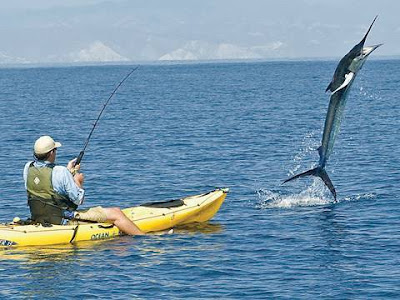
   Kayak fishing, a form of fishing which is fishing from a kayak. Kayak fishing has grown in popularity in recent years, because it is virtually open to just about anywhere. You can paddle on lakes, streams and even in the ocean. Even if you’re not a strong paddler, you can still venture out and catch some great fish. At the same time, the design of the boat becomes better and better, and people don’t have to worry about the security problem. But kayak fishing is not easy, you must know something before you have a kayak fishing trip.
kayak fishing

   1.  Choose the best kayak
   Kayaks were originally developed by indigenous people living in the Arctic regions, who used the boats to hunt on inland lakes, rivers and the coastal waters of the Arctic Ocean, North Atlantic, Bering Sea and North Pacific oceans. It has long been a means of transportation and the stealth means of approaching easily spooked fish, such as cobia and flounder.
   When you buy or rent a kayak, you shouldn’t choose the first one you see. There are several key factors to consider:
a.  In saltwater or freshwater?
b.  In areas where docks are easy to access?
c.  For bass? Trout? Catfish? etc.
   Different kayak are suitable for different occasions. For example, if you want to fish the large fish, you’d better choose a kayak with more space. And you should also make sure that you will be comfortable when you sit in the kayak.

   2.  Choose the fishing tackles
   No matter you like fishing on the kayak or the pier or anywhere else, right gears can always help you make the most out of every fishing opportunity. Here are some tips for choosing the right fishing gears.
 Fishing rod: Even though you can use any sizes of rod you use in kayak, but it’s better to use a fishing rod which suits your need. It’s better to use shorter fishing rods to use in kayaks. And you have to make sure that it is easy to hold.

 fishing rod

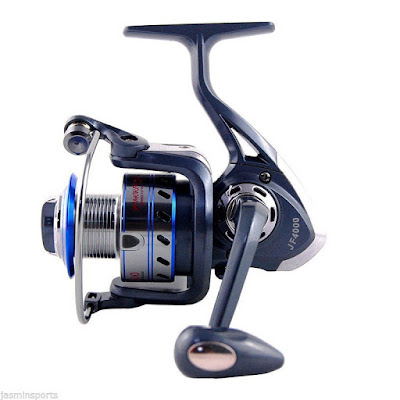
Fishing reel: You’d better choose the spinning reels because they are workhorses and are easy to rebuild.
 spinning reel

   Fishing lures: Most useful is the buck tail jig. Tip it with a piece of shrimp, squid, or cut bait and it'll catch the majority of species.

 fishing lures

   Tackle box: A good fishing tackle box should help you keep everything in order, and can make sure that everything is easily accessible.

tackle box

   3.  Safety problems
        Although the design of the boat is better and better, but we still need to pay attention to the security. Just in case.
a.   Please always wear your lifejacket when you are on the boat, and keep the a small 
   first aid kit handy
b.   As we all know, Water reflects sunlight strongly, so if you’re out during the day, be 
   sure to bring extra sunscreen.
c.   You’d better consult an experienced kayak fisherman before if you a beginner, and 
   you can follow him when he go fishing if it is possible.


   Kayak fishing is an exciting adventure, and it provides you a brilliant opportunity to drive you closer to the nature. You can have a try if you have such a chance.


2017年1月17日星期二

What Is Sport Fishing?

When it comes to fishing, we generally divide it into 2 parts: the sport fishing and the commercial fishing. We know that commercial fishing means people catch fish and other seafood for commercial profit, there are many people make their living by commercial fishing. Then, what is sport fishing? What do you know about it?

Sport fishing

Sport fishing also called recreational fishing, it is fishing for pleasure or competition. The most common form of sport fishing is done with a fishing rod, a fishing reel, fishing line, fishing hooks and fishing lures. Of course it has many other fishing tackles which we collectively call them the terminal tackles, for example, the sinkers, fishing float and fishing swivels.

Sport fishing tackles


    It is hard to affirm the early evolution of sport fishing, but we can sure that the sport fishing took a great leap forward after the English Civil War, where a newly found interest in the activity left its mark on the many books and treatises that were written on the subject at the time. British fly-fishing continued to develop in the 19th century, with the emergence of fly fishing clubs, along with the appearance of several books on the subject of fly tying and fly fishing techniques, and this is start of the expansion period of sport fishing, and now, it becomes more and more popular all over the world.
sport fishing

    If you want to experience the sport fishing, you should know the common game fish around us, here is a simple list:

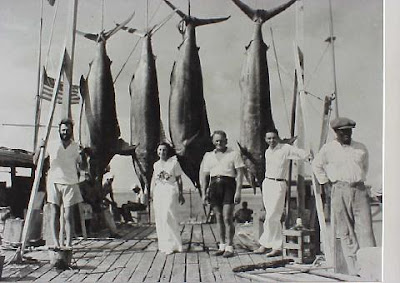
  •      Big game fish are bony saltwater fish such as tuna, tarpon, and billfish (sailfish, marlin and swordfish).
  •    In North America, anglers fish also for common snook, redfish, salmon, trout, bass, pike, catfish, walleye and muskellunge. The smallest fish are called panfish, because they can fit in a normal cooking pan. Examples are crappies, perch, rock bass, bluegill and sunfish. Panfish are often hunted by younger anglers.
  •    In the United Kingdom, "game fish" refers to Salmonids (other than grayling) – that is, salmon, trout and char. Other freshwater fish are called coarse fish.
  •    Some popular game fish have been transported worldwide. Rainbow trout, for instance, can now be found nearly anywhere that the climate is appropriate, from their original home on the Pacific Coast of North America to the mountains of southern Africa.


In the past, sport fishers will always kill the fish they catch even they don’t eat them. But with the increase of the environmental protection consciousness of people, increasingly anglers practice catch and release to improve fish populations. Some game fish are also targeted commercially, particularly salmon.

As a popular game which has thousands of fans, sport fishing has it’s own conventions, rules, licensing restrictions and laws that limit the way in which fish may be caught. The International Game Fish Association (IGFA) makes and oversees a set of voluntary guidelines. The local government will help to put these rules in place.

There is no doubt that the sport fishing is an attractive game. And with the development of the technology, I believe the fishing tackles will become more and more advanced, and the sport fishing will become more and more challenging and humanized.