显示标签为“fishing rod”的博文。显示所有博文

2017年2月21日星期二

What Do You Know about Pond Fishing?

If you want to experience a successful and exciting fishing trip, you don’t have to go somewhere have large bodies of water. There is a great variety of underwater life swimming around in your local pond! Sunfish, Bass, Crappie, and Catfish are just a few of the commonly found fish residing in your local fishing hole. The same as lake fishing, pond fishing is also a popular style of freshwater fishing, and there are many skills and be applied to it. Today, we will have a brief introduction about pond fishing and its skills.
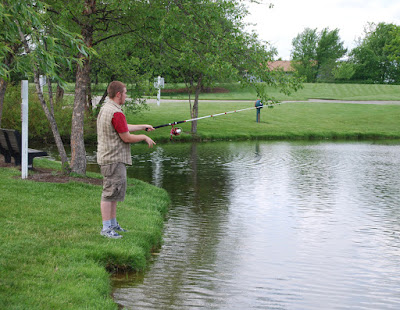
pond fishing

   Pond fishing is the method of fishing in a body of water that has a photic zone throughout its entire width and length. We generally divide the ponds into 2 kinds: the privately owned and the publicly owned. So, before you go fishing, please make sure that the owners allow you to fish when the ponds are private. And when the ponds are public, you should follow creel limits set by local or state agencies. Then, let’s talk about the fishing skills.

   The fishing tackles
    The fishing rod: As we all know, ponds come in all sizes but are generally small bodies of water, so you’d better use a fishing rod which is not longer than 6 feet. And the same time, you can choose a fast action, medium-light rod with a spinning reel, it will help you catch some small in the ponds.

    The baits: When fishing in the ponds, we usually suggest you to use the live baits, especially the worms because they are attractive for fish in the ponds. If you want to use the artificial fishing lures, you can use the life-like miniature crickets, crawfish and minnows or plastic worms.
minnow baits

    Fishing time
    Most fish in the ponds have siestas, so it is hard to catch any fish during the heat of the afternoon. The early morning or evening is usually the best time for pond fishing. Only when you choose an appropriate time, you are probably to get the result you want.

    Fish in the bottom of water
    Because ponds are generally shallow, the fish will often locate in the deepest water as a safe haven where they spend the majority of their time. If there is any structure in a pond, it will attract fish. Creek channels, road beds, weeds, grass, brush, rocks or timber are prime places to find fish in a pond.

    Use Temperature to Your Advantage
 Fish like a specific type of water temperature because of the amount of oxygen in it, not to mention it’s what their body can tolerate. Fountains, streams and springs feeding into a pond can provide adjustable water temperatures that might be more appealing to specific fish.

Stay Hidden and Out of Sight
  If you can see the fish then they can see you! In small bodies of water like a pond it’s not uncommon for fish to be able to see you. In fact, vibrations travel farther in small ponds and even if they can’t see you they can tell someone is near the edge of the water. Try to walk up quietly and stay out of sight, and use camouflage clothing that matches the local environment. You can find a wide selection of camouflage clothing on amazon for affordable prices.


  Many people don’t like fishing in the ponds, because they think the ponds are small, and they can’t have a huge result. It is completely wrong, small ponds also have big fish as long as you use the right fishing skills. And if you are a beginner, the pond fishing is the most suitable style for you.


Contact us:

  Email
 info@jsmfishing.com
  
  Whatsapp
   +86 18105155024

2017年2月17日星期五

Do You Know How to Surf Fish?

Surf fishing is a kind of popular game fish all over the world, and many people fall in love with it. But you may ask that why I can’t catch as much fish as others. In my opinion, the main reason is that you know little about the skills of surf fishing. As we all know, different fishing styles have different skills, imagine if you use the skills of lake fishing to surf fishing, can you a successful surf fishing trip? Today, we will discuss the tips of surf fishing, and I hope it can be helpful for you.
surf fishing

Make a survey before fishing
No matter you are the first time to surf fish, or first time to fish in a new spot, you should take a walk along the beach at low tide, and make some notes:

   1. Make a note of where the gullies, hollows and banks are.
   2. Does the nature of the seabed change at all? Sand, shingle, mud...?
   3. Any sign of shellfish beds? Cockles, razor fish, mussels, etc?
   4. Any patches of weed and rough ground?
   5. Are there any tackle-robbing (but fish-attracting) obstructions you need to be aware of?
   6. Take this exploration one stage further by casting a bare lead (no hooks) from the low water mark. Bring it in slowly and you'll be able to feel changes in seabed conditions and contours.

Trust me, the data you get will make you have a wonderful surf fishing.

   Fishing tackles
   No matter what kind of fishing you like, appropriate fishing tackles are always playing an important role, and the gear you decide to use should be based on the target species you want to catch. For surf fishing, it's easy to get started with just a few rigs, some natural saltwater bait, and a surf rod and reel combo. Here are some tips for you to choose the fishing tackles:

   You can use lighter gear and shorter rods for smaller species, while larger species will require heavier gear and a longer rod. For example, you may want to use a 7 to 9-foot medium heavy fishing rod for smaller species. For these larger species you should use a surf rod that is 12 to 15 feet in length with a heavy duty saltwater spinning saltwater spinning reel that has been set up with 20 to 25-pound line.
fishing rod & reel

   For fishing in the surf, you will want to use a fish finder rig, two-hook bottom rig, or the popping cork rig. These rigs will help you get your baits in the portion of the water column where the fish are feeding.

   Please remember to bring more fishing sinkers like pyramid sinkers, egg sinkers, and a few teardrop sinkers in your tackles box for surf fishing, and the weight of the sinkers should be about 6 ounces. The Surf fishing is the sport of catching fish standing on the shoreline, and the current can be fast and strong sometimes, so you need the sinkers to help you put the baits into the right place.
 fishing sinkers

   You’d better choose the circle hooks for surf fishing. Use circle hooks in sizes 7/0 or 8/0 with larger baits that are used for species such as striped bass. For smaller species, you can downgrade the size of your circle hook to between a 2/0 and a 4/0, depending on the size of the bait you are using (with larger baits use larger hooks).

circle hook

   Tie the best surf fishing rig
   Tie a good surf fishing rig is important for surf fishing, and a goof fishing rig should be:

   1. Be aerodynamic in flight to enable long casting;
   2. Present the bait on the seabed in a natural appearance;
   3. Securely mount the bait whilst enabling the hooks to be unobtrusive yet take hold in a fish's mouth.


   There are not only these skills for surf fishing. If you are really interested in surf fishing, I believe you will find more.


Contact us:

  Email
 info@jsmfishing.com
  
  Whatsapp
   +86 18105155024


2017年2月16日星期四

What Do You Know about Surf Fishing?

Surf fishing is the sport of catching fish standing on the shoreline or wading in the surf. Both live bait and fishing lures are used by surf fishermen and the majority of surf fishing is done in saltwater. This method of fishing can be confused with pier fishing however they are considered to be two different methods. Do you know the difference between them? And do you know how to improve your surf fishing?
 surf fishing

What is the difference between surf fishing and pier or shore fishing?
Compared with pier or shore fishing, the biggest difference of surf fishing is the surfcasting. Then, what is surfcasting?

Surfcasting is a casting technique which separates the surfcaster from the ordinary shore, pier, or boat fisherman. Surfcasting uses the long fishing rods which between 12’to 16’. Then, the anglers will use both their hands and even their entire bodies to cast because a great distance needs to be covered to reach inshore fish that are feeding. But please be careful when you casting, and make sure that there is no one around you, because the surfcasting are easy to hurt people who stand around you.

How to improve your surf fishing?
Details determine success or failure. Here are some simple things which can improve your surf fishing, and it won’t take you much time to learn it.

  The baits
  As we all know, the soaking soft baits are only lasting a few casts as once they've been in the briny for a little while they become water-logged and too soft to hold up through the action of the cast or the impact of the water.

  For this problem, salted bait is one useful solution. The salting process involves putting layer upon layer of salt on the fish until most of its moisture has been removed.  This results in a tougher bait that is more resistant to the wear-and-tear of surf fishing.

  Another way is to try using ghost cotton: Ghost cotton can be wrapped around the bait a few times to hold it together and to keep it tighter on the hook.  This will strengthen the bait against the water's impact when it's cast and will also make it more difficult for any of those frustrating pickers to get away with your bait.

  The line

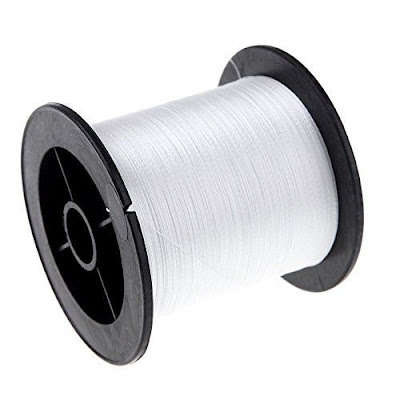
  As we all know, we generally divide the fishing line into 2 types: braid line and mono line. They both have advantages and disadvantages when fishing. If you want to have a successful surf fishing trip, you’d better know the difference between them and how to use them appropriately.

  Braid lines have very little stretch and have a low tolerance to abrasion. If the wave is strong or the fish has a heavy hit, the braid lines can’t work well.
braid line

Monofilament lines have a strong stretch, but they are not as sensitive as braid lines, and can’t cast distant. Also while the flexibility of mono will allow for some give through the impact of a wave, its larger diameter, sometimes up to twice the diameter of braided lines, can create issues.

The distance
Casting too far or too short is always a problem for surfcasters, it is correct in most conditions that the further you cast your line the more likely you are to catch fish. But sometimes, you need cast short. This determined by the species you are hunting.


As fish tend to congregate around structure and drop-offs the location of these can locations can sometimes be in quite close to the shoreline. Sometimes they can be right out the back of the location you are fishing.


Contact us:

  Email
 info@jsmfishing.com
  
  Whatsapp
   +86 18105155024

2017年2月7日星期二

How to Cast a Spinning Reel?

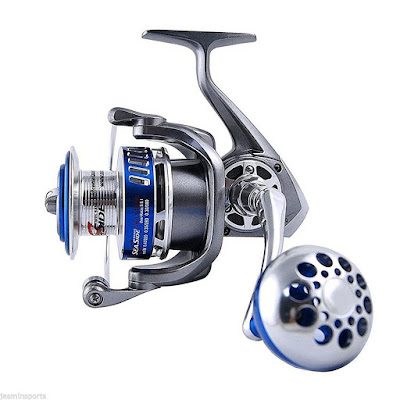
As one of the most popular fishing reels all over the world, spinning reels are easy to use and work extremely well, more and more people (especially the beginners) prefer to use the spinning reel instead of other fishing reels. Though the spinning reels re easy-operated, if you don’t know how to use it appropriately, you would catch nothing. Today, we will talk about how to cast the spinning reel correctly.
spinning reel

Before casting your spinning reels, you should do some preparatory work.

First, you should choose the right fishing line. The type of fishing line can determine the quality of your cast to some extent. If you are a beginner, you can choose the fishing line which can help you avoid the line twist. And if you are experienced, you’d better choose the fishing line which allows you to make much longer cast.

  Secondly, you should learn how to hold your fishing rod correctly in advance. Many people always complain that they can’t cast the reels well, I think the most important reason is that they don’t know how to hold the fishing rod.
I can give you a way to hold the rod: hold the rod in your casting hand with your forefinger in front of the reel and your other fingers behind it. This gives you a better casting grip and leaves your forefinger free for the line as you cast so you can "trap" the line, by not letting it move easily, as you are casting to keep it from reeling out too far.

After doing the preparatory work, you can be ready for your cast. Here are the steps of casting the spinning reel. But we can only provide you the general steps, you can summarize some details by practicing.

Step 1: Reel in until your bait is 6 to 12 inches (15 to 30 centimeters) from the rod tip. If you have a sinker or bobber attached to the line, it should be 6 to 12 inches from the rod tip instead.
Step 2: Using your right index finger lay it over the line. It is not necessary to put a lot of tension on the line with your finger just enough to keep the fishing lure from falling when the reel is put into free spool mode.
Step 3: Open the reel bail. The bail is a loop of wire on the rotating rim outside and behind the reel spool. It gathers the line when you reel in and deposits it on the spool. Opening it moves it out of the way of the line so you can cast your lure.
Step 4: Pull the rod tip back so the tip sweeps over your dominant shoulder, and then bring it forward swiftly pointing the rod tip at your target. As the rod comes forward of your shoulder, release the line with your finger so the weight of the lure pulls line off the reel.
Step 5: Close the bail with your opposite hand and begin your retrieval. Note: To avoid line twist always use your hand to close the bail, do not use the handle to close the bail.

After knowing the basic steps, here are some little tips may be helpful for you.
1. It is important to face your target tip when casting a spinning rod. This will make it much easier to make an accurate cast and also avoid putting strain on your back while casting.
2. A common problem of using a spinning reel is that the line twisting. If you meet this problem, you can use a snap swivel at the end of the fishing line.

3. Practice makes perfect. Casting the spinning reel is a skilled work, you can learn it at an open space. If you practice enough at home, you will find you can cast you reel easily when fishing.


Contact us:

  Email
 info@jsmfishing.com
  
  Whatsapp
   +86 18105155024

2017年1月18日星期三

What Do You Know about Kayak Fishing?

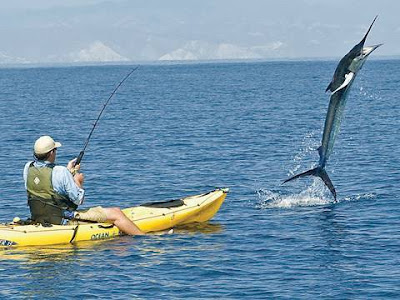
   Kayak fishing, a form of fishing which is fishing from a kayak. Kayak fishing has grown in popularity in recent years, because it is virtually open to just about anywhere. You can paddle on lakes, streams and even in the ocean. Even if you’re not a strong paddler, you can still venture out and catch some great fish. At the same time, the design of the boat becomes better and better, and people don’t have to worry about the security problem. But kayak fishing is not easy, you must know something before you have a kayak fishing trip.
kayak fishing

   1.  Choose the best kayak
   Kayaks were originally developed by indigenous people living in the Arctic regions, who used the boats to hunt on inland lakes, rivers and the coastal waters of the Arctic Ocean, North Atlantic, Bering Sea and North Pacific oceans. It has long been a means of transportation and the stealth means of approaching easily spooked fish, such as cobia and flounder.
   When you buy or rent a kayak, you shouldn’t choose the first one you see. There are several key factors to consider:
a.  In saltwater or freshwater?
b.  In areas where docks are easy to access?
c.  For bass? Trout? Catfish? etc.
   Different kayak are suitable for different occasions. For example, if you want to fish the large fish, you’d better choose a kayak with more space. And you should also make sure that you will be comfortable when you sit in the kayak.

   2.  Choose the fishing tackles
   No matter you like fishing on the kayak or the pier or anywhere else, right gears can always help you make the most out of every fishing opportunity. Here are some tips for choosing the right fishing gears.
 Fishing rod: Even though you can use any sizes of rod you use in kayak, but it’s better to use a fishing rod which suits your need. It’s better to use shorter fishing rods to use in kayaks. And you have to make sure that it is easy to hold.

 fishing rod

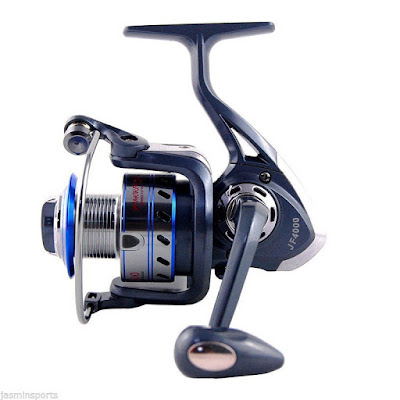
Fishing reel: You’d better choose the spinning reels because they are workhorses and are easy to rebuild.
 spinning reel

   Fishing lures: Most useful is the buck tail jig. Tip it with a piece of shrimp, squid, or cut bait and it'll catch the majority of species.

 fishing lures

   Tackle box: A good fishing tackle box should help you keep everything in order, and can make sure that everything is easily accessible.

tackle box

   3.  Safety problems
        Although the design of the boat is better and better, but we still need to pay attention to the security. Just in case.
a.   Please always wear your lifejacket when you are on the boat, and keep the a small 
   first aid kit handy
b.   As we all know, Water reflects sunlight strongly, so if you’re out during the day, be 
   sure to bring extra sunscreen.
c.   You’d better consult an experienced kayak fisherman before if you a beginner, and 
   you can follow him when he go fishing if it is possible.


   Kayak fishing is an exciting adventure, and it provides you a brilliant opportunity to drive you closer to the nature. You can have a try if you have such a chance.