显示标签为“fishing lure”的博文。显示所有博文

2017年2月21日星期二

What Do You Know about Pond Fishing?

If you want to experience a successful and exciting fishing trip, you don’t have to go somewhere have large bodies of water. There is a great variety of underwater life swimming around in your local pond! Sunfish, Bass, Crappie, and Catfish are just a few of the commonly found fish residing in your local fishing hole. The same as lake fishing, pond fishing is also a popular style of freshwater fishing, and there are many skills and be applied to it. Today, we will have a brief introduction about pond fishing and its skills.
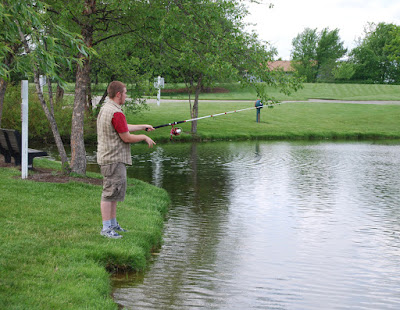
pond fishing

   Pond fishing is the method of fishing in a body of water that has a photic zone throughout its entire width and length. We generally divide the ponds into 2 kinds: the privately owned and the publicly owned. So, before you go fishing, please make sure that the owners allow you to fish when the ponds are private. And when the ponds are public, you should follow creel limits set by local or state agencies. Then, let’s talk about the fishing skills.

   The fishing tackles
    The fishing rod: As we all know, ponds come in all sizes but are generally small bodies of water, so you’d better use a fishing rod which is not longer than 6 feet. And the same time, you can choose a fast action, medium-light rod with a spinning reel, it will help you catch some small in the ponds.

    The baits: When fishing in the ponds, we usually suggest you to use the live baits, especially the worms because they are attractive for fish in the ponds. If you want to use the artificial fishing lures, you can use the life-like miniature crickets, crawfish and minnows or plastic worms.
minnow baits

    Fishing time
    Most fish in the ponds have siestas, so it is hard to catch any fish during the heat of the afternoon. The early morning or evening is usually the best time for pond fishing. Only when you choose an appropriate time, you are probably to get the result you want.

    Fish in the bottom of water
    Because ponds are generally shallow, the fish will often locate in the deepest water as a safe haven where they spend the majority of their time. If there is any structure in a pond, it will attract fish. Creek channels, road beds, weeds, grass, brush, rocks or timber are prime places to find fish in a pond.

    Use Temperature to Your Advantage
 Fish like a specific type of water temperature because of the amount of oxygen in it, not to mention it’s what their body can tolerate. Fountains, streams and springs feeding into a pond can provide adjustable water temperatures that might be more appealing to specific fish.

Stay Hidden and Out of Sight
  If you can see the fish then they can see you! In small bodies of water like a pond it’s not uncommon for fish to be able to see you. In fact, vibrations travel farther in small ponds and even if they can’t see you they can tell someone is near the edge of the water. Try to walk up quietly and stay out of sight, and use camouflage clothing that matches the local environment. You can find a wide selection of camouflage clothing on amazon for affordable prices.


  Many people don’t like fishing in the ponds, because they think the ponds are small, and they can’t have a huge result. It is completely wrong, small ponds also have big fish as long as you use the right fishing skills. And if you are a beginner, the pond fishing is the most suitable style for you.



Contact us:

  Email
 info@jsmfishing.com
  
  Whatsapp
   +86 18105155024

2017年2月16日星期四

What Do You Know about Surf Fishing?

Surf fishing is the sport of catching fish standing on the shoreline or wading in the surf. Both live bait and fishing lures are used by surf fishermen and the majority of surf fishing is done in saltwater. This method of fishing can be confused with pier fishing however they are considered to be two different methods. Do you know the difference between them? And do you know how to improve your surf fishing?
 surf fishing

What is the difference between surf fishing and pier or shore fishing?
Compared with pier or shore fishing, the biggest difference of surf fishing is the surfcasting. Then, what is surfcasting?

Surfcasting is a casting technique which separates the surfcaster from the ordinary shore, pier, or boat fisherman. Surfcasting uses the long fishing rods which between 12’to 16’. Then, the anglers will use both their hands and even their entire bodies to cast because a great distance needs to be covered to reach inshore fish that are feeding. But please be careful when you casting, and make sure that there is no one around you, because the surfcasting are easy to hurt people who stand around you.

How to improve your surf fishing?
Details determine success or failure. Here are some simple things which can improve your surf fishing, and it won’t take you much time to learn it.

  The baits
  As we all know, the soaking soft baits are only lasting a few casts as once they've been in the briny for a little while they become water-logged and too soft to hold up through the action of the cast or the impact of the water.

  For this problem, salted bait is one useful solution. The salting process involves putting layer upon layer of salt on the fish until most of its moisture has been removed.  This results in a tougher bait that is more resistant to the wear-and-tear of surf fishing.

  Another way is to try using ghost cotton: Ghost cotton can be wrapped around the bait a few times to hold it together and to keep it tighter on the hook.  This will strengthen the bait against the water's impact when it's cast and will also make it more difficult for any of those frustrating pickers to get away with your bait.

  The line

  As we all know, we generally divide the fishing line into 2 types: braid line and mono line. They both have advantages and disadvantages when fishing. If you want to have a successful surf fishing trip, you’d better know the difference between them and how to use them appropriately.

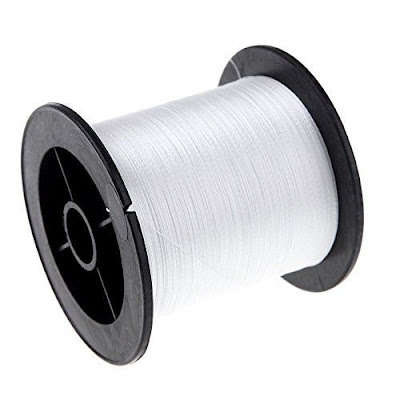
  Braid lines have very little stretch and have a low tolerance to abrasion. If the wave is strong or the fish has a heavy hit, the braid lines can’t work well.
braid line

Monofilament lines have a strong stretch, but they are not as sensitive as braid lines, and can’t cast distant. Also while the flexibility of mono will allow for some give through the impact of a wave, its larger diameter, sometimes up to twice the diameter of braided lines, can create issues.

The distance
Casting too far or too short is always a problem for surfcasters, it is correct in most conditions that the further you cast your line the more likely you are to catch fish. But sometimes, you need cast short. This determined by the species you are hunting.


As fish tend to congregate around structure and drop-offs the location of these can locations can sometimes be in quite close to the shoreline. Sometimes they can be right out the back of the location you are fishing.


Contact us:

  Email
 info@jsmfishing.com
  
  Whatsapp
   +86 18105155024

2017年2月14日星期二

What Do You Know about Sabiki Rig?

Sabiki means "to catch bait" in Japanese. A sabiki rig is a string of fishing lures connected together onto a single leader, it consists of any number (usually between 6 and 10) of small fishing hooks, each one on individual dropper lines which are a few inches long. The individual dropper lines are then tied to a longer leader in series, about 6 inches (15 cm) apart; a weight is tied to the end of the leader. The individual hooks are decorated as lures or tied like flies similar to those used in fly fishing. Sabiki rigs are very effective for catching threadfin herring -- the best tarpon bait.
sabiki rig

How Sabiki rig works?
The hooks connected to the main leader of the sabiki are made from tiny gold (usually but not always) hooks. The hooks are covered with foil or Mylar plastic clipped with scissors we think so they're the shape of a tiny fish. Some very effective varieties are impregnated with fish or shrimp and some are even made from fish skin. Sabikis are a proven, effective, and simple way to catch bait. Many experienced anglers prefer sabiki rigs instead of cast nets because the baits are less injured and usually stay alive longer and are much livelier. Some very effective varieties are impregnated with fish or shrimp and some are even made from fish skin.

In short, a sabiki is a lure for baitfish, and one that's perfect for catching tarpon bait. They come in different sizes for different sized baits. We're talking about small ones used for small baitfish and large ones used for larger baitfish.

At the bottom of the main leader is a clip. The clip can be opened so you can connect the bottom of the leader to what is called a "Bell" sinker (Bell lead) or a pyramid sinker. On the other (top) end of the leader is a small barrel swivel. You tie your leader to the empty ring at the top of the sabiki rig, and lead to the bottom. We also use "Teardrop" sinkers, "Bank Sinkers, and if you're in really deep water, what's called a "Disk" sinker.

How to catch fish with sabiki rig?
 sabiki rig fishing

Experienced anglers always summarized the process of sabiki fishing into 5 steps:

First of all, you should find the school of the fish you want to catch. It is possible to catch some fish if you don’t find the school, but it will not be as productive.

Secondly, the sabiki rig is then lowed into the water. A simple jigging motion will make the small jigs dance and attract the bait to the jigs.

Thirdly, you should feel a slight tap as bait fish bite the jigs. It is possible to catch several fish at once. Reel up the sabiki rig and remove the bait from the hook and place in your bait container.

Then, continue jigging the sabiki rig till you have caught as much fresh bait as required.

Finally, catch the fish you want.

What should you pay attention to?
The shadow of your Kayak naturally attracts bait fish! Sit in one spot for a little while, drop the sabiki on!

The Sabiki rig can be cast a good distance without foul… and you can easily hit a bait ball 20 yards away. Stop your bail as soon as the weight hits the water. This keeps your line of sabiki flies from stacking up and becoming tangled. Reel in as soon as you get hit.

Once you feel that first bite, keep pressure on the fishing line! You can keep it in the water for a few seconds trying to get that stringer full… but don’t do it for too long. Struggling bait fish will tangle up a sabiki (especially with a lighter weight).


Contact us:

  Email
 info@jsmfishing.com
  
  Whatsapp
   +86 18105155024


2017年2月9日星期四

How to Catch Bass in Winter with Different Lures?

With the coming of winter, bass fishing becomes more and more difficult. A common problem for all bass fishing anglers is how to choose the right fishing lures. As we all know, fish are not as sensitive as before in the winter, if you don’t use the right lures or baits, they will hard to be attracted. Today, we will introduce some useful fishing lures to you.

Soft-plastic worms
Soft-plastic worms

As one of the best fishing lures of winter bass fishing, soft-plastic worms are used by many anglers. Fish can’t move quickly under the cold weather, so when you fishing with a lure, you must move your lures slowly. The Biggest advantage of soft-plastic worms is that they have no fast-moving parts. So you don’t have to pay much attention to slow down the lures’ movement.

Spoon lures
Spoon lures

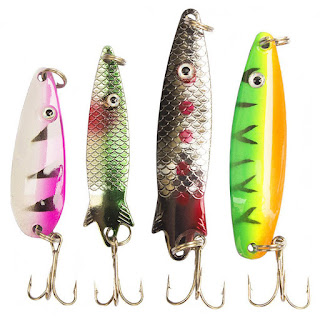
A spoon lure, in sport fishing, is an oblong, usually concave lure, usually made of metal or a shell, shaped like the bowl of a spoon. Many anglers like using spoon lures in winter because they can drop the lures right down into the school of bass, which means that fish don’t have to chase the lures. According to some experienced fishermen, the bass will often grab your spoon as it is falling.
If you want to use the spoon lures, the most important thing is to find a resident baitfish near your fishing spot. At the same time, you should also learn to drop or cast the spoon and watch your line as it falls. If you can’t drop the spoon lures at the right place, they will become useless.

Plastic grub lures
Plastic grub lures

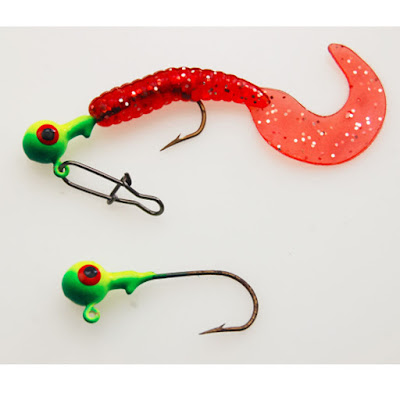
Plastic grub lures are classic winter bass fishing lures, they are simple and can be used by anglers of all skill levels. But nowadays, many anglers totally forget about them. But actually speaking, a grub can be one of the most effective bass lures for cold water. A 4-inch curly tail grub on a 1/4-ounce jig head can be all that is needed to catch the fish, they even don't require any complicated techniques.

Jerkbaits
jerkbaits

Jerkbaits are lures that carry many of the characteristics of other bass lures. We usually divide them into 2 kinds: hard jerkbaits and soft jerkbaits.
Hard jerkbaits, often known as suspending jerkbaits, are long and slender lures that are fitted with a lip, and normally with either two or three treble hooks. They work well in clear water conditions when temperatures drop because they imitate dying baitfish. All you have to do is cast out a jerkbait, and then give it a few cranks of your reel so that it drops down to the right depth. From there, use a jerk and pause retrieve. When cold water bass fishing with jerkbaits, don't get too hasty or impatient. Take the time to experiment with the speed of your retrieve until you figure out what the fish will respond to.

Hair jig
Hair jig

Hair jig, what's one of the best winter fishing tips to remember? Always bring along a hair jig on your cold weather trips. Hair jigs work because they can be fished slowly in either deep or shallow water situations. They are one of the most versatile winter bass fishing lures you can have in your tackle box.


  These fishing lures all have their own characteristics, and can work well in winter bass fishing. But different people have different fishing habits, you can choose the most suitable one from them. I believe right fishing lure can make your winter bass fishing trip becomes more interesting.


Contact us:

  Email
 info@jsmfishing.com
  
  Whatsapp
   +86 18105155024