2016年12月7日星期三

How to Select a Fishing Float?

As we all know, fishing float (also called a bobber in the United States) is a fundamental accessory of fishing. Selecting the right float for the conditions will make the difference between a great day on the water or catching nothing at all. But select the right float is not an easy work, you have to pay attention to many details.       
     
 fishing float
                                                                         

 1. The size of fishing float
 “Diameter” is a word which people use frequently when they talk about the size of fishing float. If you want to select a suitable fishing float, diameter is a very important factor.
 It is a common sense that the size of fishing floats should be determined by waves, wind strength, the depth of the water, shyness of fish, current, its size and type of bait use and required casting distance. Different diameters of floats are designed for different areas. If you select a wrong size, you may catch nothing in the end.
 Experienced fishermen suggested that larger diameter floats have a tendency to be more stable in the current.
fishing float
 2. The types of fishing float
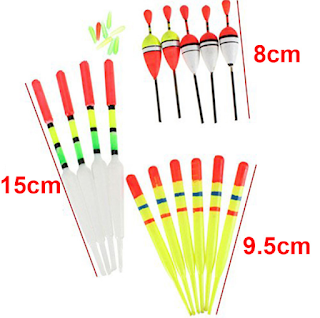
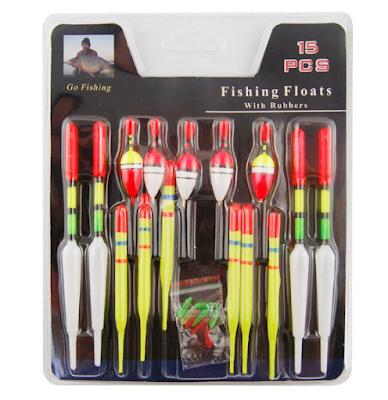
 People have divided the fishing floats into many types by their different shapes. And floats with different shapes are suitable for different conditions. For example, longer floats are better for fishing at deeper waters and shorter floats are better for shallower waters. Here are some common types of fishing floats.
                          
 fishing float

a. Waggler floats
Waggler float is the term given to any float which is attached only at the bottom to the line. It is the most common fishing float nowadays. The waggler floats are very sensitive, and they are mainly use in 3 conditions:
   • Still water or slow to medium paced rivers
   • Turbulent water during windy conditions 

   • Choppy lake waters with medium to large size waves
            
b. Stick floats
Stick Float is a straight float with a taper. It is always attached to the line both top and bottom. The advantage of using this float is that it can be immersed in the flow of the water against a tight line without the float submerging as the tide pulls on the trace. And people generally use it for river fishing.

c. Pole floats
Pole floats are made from wire, nylon, balsa or cane, and they are very small and do not require much weight to control stability. Pole floats come in a lot of different shapes and it’s important to know which one to choose. Here are the suitable fishing conditions for pole floats:
• River fishing (float with the widest part of the body at the top)
• Fishing in windy conditions on still waters (float with the widest part of the body at the bottom)
• Fishing deep and shallow lakes and canals
• When fish are shy (float with slim body as they will indicate the most delicate bites)


2016年12月6日星期二

What We Can Do with a Fishing Swivel?

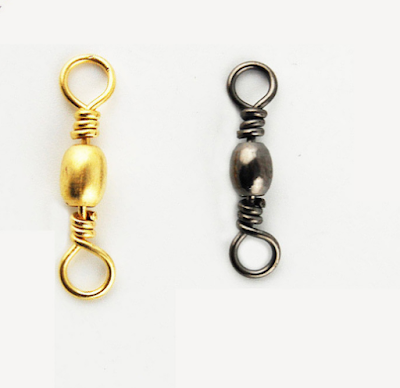
Fishing swivel is a small device consisting of two rings connected to a pivoting joint. The device is usually made of metal, and the pivoting joint is usually ball or barrel shaped. The linkage in the center is what allows the line connected to the bottom ring of the swivel to move without impacting on the fishing line connected to the top ring of the swivel.                                             fishing swivels
Though people know the importance of the fishing swivel, they still have many questions. Today we will have a brief introduction to this simple fishing tackle.

1. Functions of fishing swivels
There are two main functions of fishing swivels, and that why more and more fishermen use swivels. First, swivels can provide a point between the main fishing line and the terminal tackle, and they are there to reduce the opportunity for your line to twist. The second function of fishing swivels is that they provide a link between two pieces of line simply. They can be used to join your mainline and leader together if you don't trust your line knotting skills or some types of swivels can be used to provide a link for an additional length of line to be connected for hooks or unorthodox sinker placements. 

2. When to use a fishing swivels
Though fishing swivels can help fishermen a lot when fishing, it’s not suitable to be applied in all instances. As we all know, the biggest function of fishing swivels is to allow the line to untwist during line retrieval, preventing undesirable tangling. So situations in which line twists are a risk is when swivels should be used.

According to some experienced people, the primary situations when they use swivels are:
a.  When using a casting lure that is prone to twist during the retrieve
b. When trolling live/dead baits that are likely to twist

3. The types of fishing swivels
There are two main types of fishing swivels. The first is barrel/box swivels, and another is ball bearing swivels.

a. Barrel/box swivels
Barrel swivels are common for fishermen, because they are very cheap and simple to use. Their design is such that when pressure is exerted on the two rings and they are pulled apart the stoppers inside the barrel of the swivel press up against the base / top of the barrel.
barrel swivels

b. Ball bearing swivels
Ball bearing swivels bring more technology to the table and make up for the deficiencies found in barrel swivels.  As the name suggests these swivels have ball bearings inside to minimize any friction and allow the swivel to twist freely when it is under pressure.
ball bearing swivels


  Generally speaking, different people have different opinion about the fishing swivels. Some people think swivels are useless when fishing, but others think swivels plays an important role in fishing. Why they have different opinions? In my view, it is just because they have different habits when fishing. As long as you can catch fish, which fishing tackles you use is not important at all.


2016年12月5日星期一

What Should We Know about Fishing Reel?

Fishing reel is a cylindrical device attached to a fishing rod used in winding and stowing line. There is no fishing reel at the beginning of fishing. According to the research, the earliest known illustration of a fishing reel is from Chinese paintings and records beginning about 1195 AD.

 fishing reel

As a fishing lover, what should we know about fishing reel?

1.  The role of fishing reel in fishing
The main function of fishing reel is help you control your fishing line, how it's paid out and how it's retrieved. Modern fishing reels usually have fittings aiding in casting for distance and accuracy, as well as retrieving line. Fishing reels are traditionally used in the recreational sport of angling and competitive casting. They are typically attached to a fishing rod, though some specialized reels are mounted directly to boat gunwales or transoms.
                         
2. The types of fishing reel
There are various fishing reels for people in the market, such as conventional reels, spinning reels, fly reels, bait casting reels…Today, we will introduce some common fishing reels for you.

a.  Spinning reels
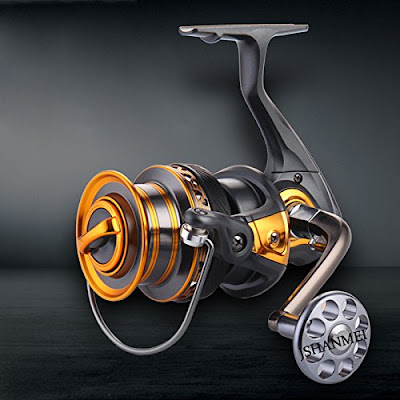
Spinning reels are designed with a fixed, open-faced spool positioned in line with the rods. Most fishing lovers are familiar with them because it is the most popular fishing reel, and many anglers like using them because they are versatile and easy to use. Spinning reel has great line capacity (can put a good amount of line on it) and you can usually buy one with an extra spool, making it easy to change out your line while you’re on the water. Though it doesn’t perform as well when heavier line (20 pounds +) is required.
           spinning reel

b.  Spincast reels
Spincast reel is the easiest reel for people.  The structure of spincast reel is simple, and  
the basic spincast system with a push button is easy for people to operate.
This type of reel has a closed face. All the important parts are kept inside, under the nose cone. But it is mainly designed for kids or beginners, if you want to buy a reel for serious fishing, spincast reel it not a good choice.


c.  Bait casting reels
The Bait casting reel is a multiplying reel– that is to say that the line is stored on a bearing-supported revolving spool that is geared so that a single revolution of the crank handle results in multiple revolutions of the spool. Bait casting reel is work great with heavy line and lures, and it is more accurate. So many people would like to choose the bait casting reel when fishing. But bait casting reels are expensive, and they are hard to operate (if you are a beginner, you’d better not choose this kind of reels).
 
bait casting reel
Different fishing reels are suitable for different occasions, if you are interested in this aspect, you can find more details about fishing reels. But please remember, a rod and reel work together to form a system. Therefore, when you buy a fishing reel, please make sure that it can used in you fishing rod.


2016年12月2日星期五

How to Choose the Fishing Sinkers?

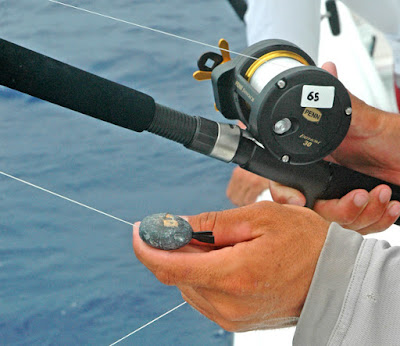
As one of the most important tackles of fishing, fishing sinker is a weight used in conjunction with a fishing lure or fishing hook to increase its rate of sink, anchoring ability, and/or casting distance. Fishing sinkers may be as small as 1 gram for applications in shallow water, and even smaller for fly fishing applications, or as large as several pounds or considerably more for deep sea fishing. They are formed into nearly innumerable shapes for diverse fishing applications. 
 fishing with sniker

  Many people don’t think much about the fishing sinkers. They believe that fish are attracted by the food they provide instead of the fishing sinkers, and pay much attention to the fishing sinkers is not necessary. So, they just choose a fishing sinker at random and put it on the line. But actually speaking, fishing with a proper sinker can help people catch more fish. Now, let’s have a brief introduction of sinkers.
 brass fishing sinker

1. The material of fishing sinkers
In ancient times, fishing sinkers are usually made by stones, rocks, or bone. Later, most sinkers are made of lead due to its low cost, ease of production and casting, chemical inertness (resistance to corrosion), and density. But sinkers with lead can lead to a pollution of the environment, and even poison the fisherman, so please be careful when using them.
Some producer used the bismuth or tungsten as the main material of fishing sinkers, and they did it. But this kind of fishing sinkers are quiet expensive, and the melting points are much higher than lead.
 lead sinker

2. The types of fishing sinkers
There are several factors which can influence you choice of sinker, so, the fishing sinkers are different in all kinds of conditions:
  •  The type of bottom (Is the bottom covered with rock, sand, weeds, or timber?)
  •  What do you want your bait or lure to do? (If the bait or lure has to cover a large amount of water, you need one kind of rig. If not, you use another.)
  •  The current (The less current, the less weight you need.)
  We have 4 most common types of sinkers:
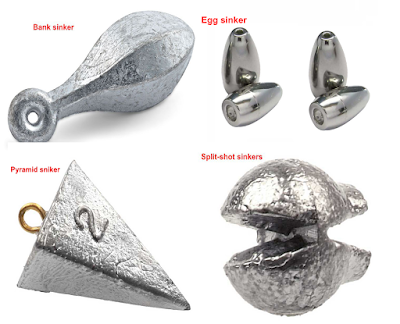
  •  Bank sinker
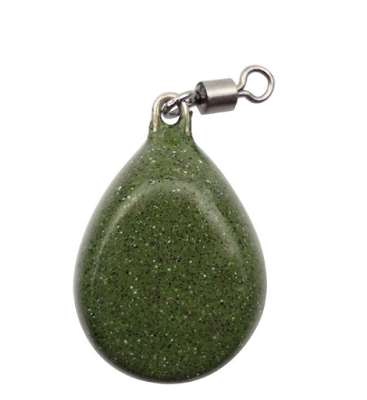
Bank sinkers are long and ovate and have a small hole at the top for the fishing line to thread through. Bank sinkers are usually used to put the bait close to the bottom.

  •  Egg sinker
Egg sinkers are rounded and often bead-like with a narrow hole through which fishing
line is threaded. These sinkers are desirable on rock or debris covered substrates. Sometimes these are called slip sinkers because the design is for these sinkers to be placed above the swivel and on the actual fishing line.
  •  Pyramid sinkers
P       Pyramid sinkers are shaped like a pyramid and are used when it is desirable to anchor on the bottom of water bodies. They are attached to the terminal end of fishing line by loops of brass.
  •  Split-shot sinkers
Split-shot sinkers are small and round with a split cutting halfway through the sinker. The split can be placed on a piece of fishing line and then crimped closed. Split-shot sinkers work best with small baits, light line or low current.                                                                                                  sinkers

   
Fishing is a simple activity, everyone can go fishing as long as you have a set of fishing tackles. But fishing is complicated at the same time, you should pay attention to each small details if you want to catch more fish. So, trying to learn more knowledge about fishing and fishing tackles, and it will be helpful for you. 


2016年12月1日星期四

Do You Know How to Choose the Right Fishing Line

A fishing line is a cord used or made for angling, fish are caught with a fishing line by
encouraging a fish to bite on a fishing hook. A fish hook will pierce the mouthparts of a fish and is normally barbed to make escape less likely. Important parameters of a fishing line are it’s length, material, and weight (thicker lines are more visible to fish). Most modern lines are made from nylon or silk.
                           
                   
fishing line
   

  Most beginners feel their mind is blank when they want to select a suitable fishing line, because there are too many kinds of fishing line in the fishing tackles store, and they have no idea about which one is better. Today, we will tell you 4 tips to choose fishing line, and trust me, it will be helpful.

1.  Have a look at the line
When you come into a fishing tackles store, the first thing you should do is taking it easy, then have a look at all the fishing line in the store. Although there are many different colors, experienced people only choose some common colors. For example, when you're fishing in low-light conditions, gold-colored line and coffee-colored line are usually a good choice. And green-colored line usually can be used when fishing in water that's filled with algae or heavy vegetation.
You should also have a look at the production date. Most fishermen never take care about this point, but it is important. The longer the fishing line preserved, the lower the quality .
fishing line
                      
2.  Touch the line
When you have selected the color you want, the next step is feeling the fishing line. Good fishing line should be smooth and uniform thickness. If the fishing line which you hold in hand feels bad, then it must be poor quality.

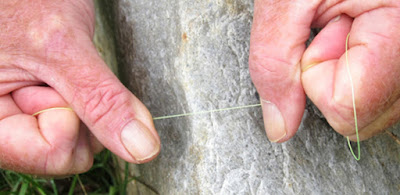
3.  Pull the fishing line
When you have found a fishing line which feels good, then you can pull both sides of the fishing line tightly, and you can feel the strength of the fishing line’s tension. Generally speaking, fishing line with strong tension is not easy to break and can fight with the big fish.
Watch out, pulling the fishing line can be dangerous sometimes, please don’t hurt your hands.
        pull the fishing line


4.  Have a bite of the fishing line
When you pull both sides of the fishing line tightly and find it has a strong tension, then you can have a bite of it. If the fishing line becomes flat, the fishing line is flexible enough. But if the fishing line has no change, it means the fishing line has a poor quality.


  Practice makes perfect, even you know many skills, choosing the right fishing line is still troublesome if you are a beginner of fishing. And when you accumulate a lot of experience, selecting the right fishing line will be easy for you.