2017年2月13日星期一

Do You Know the Specific Fish Species in the Lake?

A lake is classified as a body of relatively still water that is almost completely surrounded by land with a river or stream that feeds into it or drains from it. Lake is a great place for fishing, they can provide enough plant food and offer plenty of covering for fish to hide, so there are much fish live in the lakes. But some people are looking for a particular type of fish. If you can’t find the fish you want to catch in the lake, then it is not necessary to have a try.
lake fishing

Then, do you know the specific fish species in the lake? Here is a list, and we also provide some tips of catching these fish.

Bass–Bass is a common fish in the lake, and it is one of the most popular game fish all over the world. Bass is a kind of fish which is fun for a fight, because some of them are very big, so when people go for fishing, especially the freshwater fishing, bass is a great choice. And there are many skills of bass fishing, and some of the skills are more complicated than other lake fish, and you can see the details on this blog: The Bass Fishing

Carp– Carp is also a common fish in the lake, they’re easy to catch and can also put up a great fight, but many people will release them after fishing, because the carp are not suitable as a dish and they taste not good. The skills of carp fishing can be seen on the blog:  How to Catch Carp?

Catfish- Catfish is a diverse group of ray-finned fish, named for their prominent barbels, which resemble a cat's whiskers, This is a kind of fish which is suitable for shore fishing. And if you are a night fishing lover, then catfish is a good choice for you.

Bluegill–The bluegill is a species of freshwater fish sometimes referred to as bream, brim, or copper nose. Although the bluegills are small, many people like catching them because the process of catching them is funny, and they taste good. The fishing tackles of bluegills fishing is simple and the techniques are very basic. This kind of fish is usually live near the shore, and they like to nibble and run with a bait, so when you catch them, you can pay attention to these details.

Crappie– Crappie fishing is fun from a boat. Many people like to set out their lines and troll deeper portions of the lake, looking for a school. Like with bluegill, once you find a school it is best to work that area heavily.

Steelhead– Steelhead are great if you are looking for a fight! If you have a good river or stream you can tap into when the steelhead are running, with a bit of equipment, you could be in for a big payoff and a great time.

Northern Pike– Northerns can take time, preparation, and patience, but the fight they put up is worth the extra effort. Normally, Northern Pike resides in deep water and can be tricky to hunt down, so a boat is needed. They can be finicky eaters so learning a few fishing techniques before you go out may save some time.  Also, be sure to be prepared to deal with their razor sharp teeth!


Of course, the species of fish in the lake are far more than my list, but they are the common fish people will catch. If you want to have a trip of lake fishing, you should see if there has any fish you want to catch.


Contact us:

  Email
 info@jsmfishing.com
  
  Whatsapp
   +86 18105155024

2017年2月10日星期五

How to Choose the Suitable Saltwater Fishing Hooks?

There is an ancient legend in China about a wisdom man who called Jiang Tai Gong, he used a straight hook without any baits to catch the fish. So there is an old saying about him: A fish jumping to Jiang Tai Gong’s no hook and no bait line-a willing victim. But the fact is that Jiang Tai Gong just wanted to attract the emperor by this strange action, no really wanted to catch the real fish. Finally, Jiang Tai Gong helped the emperor and his son turn over the Shang Dynasty and established the Zhou Dynasty.
 fishing with hook

But actually speaking, it is nearly impossible to catch a fish with a straight hook. As the basic tool of fishing, hooks are crucial. In order to more enjoy the fishing, people have been improving the fishing hooks generations after generations. And now, we have many kinds of fishing hooks in the market. And today, we will introduce you some common hooks which are suitable for saltwater fishing.

Before choosing the types of fishing hooks, we should know the sizes we need. Fishing hook size is measured at the gap between the point and the shank. Saltwater fish hook sizes start at a tiny No. 32 and run up to a huge 19/0. From size 32 to 1, saltwater hook size increases while the number decreases. From size 1/0 to 19/0, the hook size increases along with the number. There is no standard in hook size, so one brand’s 3/0 may be larger than that of another brand.

The size you need is mainly determined by 2 factors: the size of the fish you catch and the size of your baits or fishing lures. The common sense for fishermen is that small hooks are suitable for fish with small mouths, while large hooks are used to catch fish with large mouth. But another rule is that when your baits are small, you’d better use the small hooks, even the fish you want to catch is large. This is because that the large hook can’t hide in the small bait.

Then let’s talk about the types of saltwater fishing hooks.

J-hook
J-hook

J-hooks earned their name from their resemblance to the letter. Some people like use j-hooks because they fit into a fish’s mouth and then catch on something on the way out, and they’ve worked that same way for a long time. But J-hooks have different styles, and each style is suitable for different types of saltwater fishing. For example, bait fishermen usually choose long-shank saltwater fishing hooks that are easy to remove from a fish’s mouth.

Circle hooks
circle hook

A circle hook is a type of fish hook which is sharply curved back in a circular shape. With the development of the catch-and-release, circle hooks have become widely used among anglers in recent years. As the fishermen pulls on the line, the hook slides forward until it reaches the fish's mouth. Once there, it lodges in the side of the mouth. These hooks are popular in the saltwater world, but are making their way into the freshwater side as well.

Treble hooks
treble hook
The treble hooks work by snagging the fish when it hits a bait. Treble fishing hooks are sized the same way as other hooks, but it usually takes a smaller treble hook to catch the same size fish as a circle or J-hook. Most plugs use treble hooks so that when the fish realizes it has eaten a lure instead of a real fish, it is already hooked.


There is no doubt that fishing hooks play an important part in all kinds of fishing. Choose the right fishing hooks can determine the success or failure of you fishing to some extent. If you are a real fishing lovers, you must have already had this sense.


Contact us:

  Email
 info@jsmfishing.com
  
  Whatsapp
   +86 18105155024


2017年2月9日星期四

How to Catch Bass in Winter with Different Lures?

With the coming of winter, bass fishing becomes more and more difficult. A common problem for all bass fishing anglers is how to choose the right fishing lures. As we all know, fish are not as sensitive as before in the winter, if you don’t use the right lures or baits, they will hard to be attracted. Today, we will introduce some useful fishing lures to you.

Soft-plastic worms
Soft-plastic worms

As one of the best fishing lures of winter bass fishing, soft-plastic worms are used by many anglers. Fish can’t move quickly under the cold weather, so when you fishing with a lure, you must move your lures slowly. The Biggest advantage of soft-plastic worms is that they have no fast-moving parts. So you don’t have to pay much attention to slow down the lures’ movement.

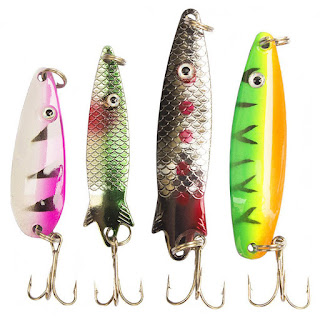
Spoon lures
Spoon lures

A spoon lure, in sport fishing, is an oblong, usually concave lure, usually made of metal or a shell, shaped like the bowl of a spoon. Many anglers like using spoon lures in winter because they can drop the lures right down into the school of bass, which means that fish don’t have to chase the lures. According to some experienced fishermen, the bass will often grab your spoon as it is falling.
If you want to use the spoon lures, the most important thing is to find a resident baitfish near your fishing spot. At the same time, you should also learn to drop or cast the spoon and watch your line as it falls. If you can’t drop the spoon lures at the right place, they will become useless.

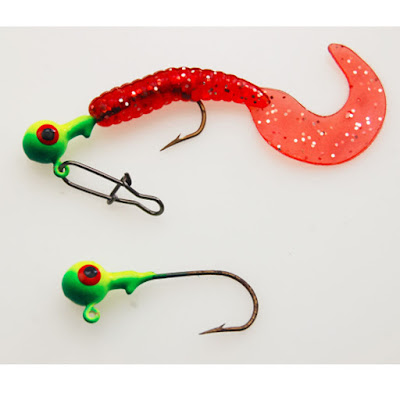
Plastic grub lures
Plastic grub lures

Plastic grub lures are classic winter bass fishing lures, they are simple and can be used by anglers of all skill levels. But nowadays, many anglers totally forget about them. But actually speaking, a grub can be one of the most effective bass lures for cold water. A 4-inch curly tail grub on a 1/4-ounce jig head can be all that is needed to catch the fish, they even don't require any complicated techniques.

Jerkbaits
jerkbaits

Jerkbaits are lures that carry many of the characteristics of other bass lures. We usually divide them into 2 kinds: hard jerkbaits and soft jerkbaits.
Hard jerkbaits, often known as suspending jerkbaits, are long and slender lures that are fitted with a lip, and normally with either two or three treble hooks. They work well in clear water conditions when temperatures drop because they imitate dying baitfish. All you have to do is cast out a jerkbait, and then give it a few cranks of your reel so that it drops down to the right depth. From there, use a jerk and pause retrieve. When cold water bass fishing with jerkbaits, don't get too hasty or impatient. Take the time to experiment with the speed of your retrieve until you figure out what the fish will respond to.

Hair jig
Hair jig

Hair jig, what's one of the best winter fishing tips to remember? Always bring along a hair jig on your cold weather trips. Hair jigs work because they can be fished slowly in either deep or shallow water situations. They are one of the most versatile winter bass fishing lures you can have in your tackle box.


  These fishing lures all have their own characteristics, and can work well in winter bass fishing. But different people have different fishing habits, you can choose the most suitable one from them. I believe right fishing lure can make your winter bass fishing trip becomes more interesting.


Contact us:

  Email
 info@jsmfishing.com
  
  Whatsapp
   +86 18105155024


2017年2月8日星期三

How to Choose Saltwater Spinning Rod and Reel?

For saltwater fishing, good fishing rod and reel are the foundations. If you use the appropriate fishing rod and reel, you will have a successful fishing. There are several kinds of fishing rod and reel in the market, such as the spinning rod and reel, the baitcasting rod and reel, jigging rod and reel…Today we will discuss how to choose the spinning rod and spinning reel for saltwater fishing.
spinning reel and rod

  No matter what kind of fishing rod and reel you choose, you should take several things to consideration before, and it can help you make a decision as quickly as possible.

1. Different rods have different length, power and action. Before you buy the rod, you should know how different rods work. Longer rods cast farther, while shorter rods provide more power for fighting fish. Action is rated from "fast" for a rod that is stiff to "slow" for a rod that bends all the way to the handle. "Power" is the weight that the rod can lift from light to extra heavy. Rods are also categorized by the pound-test line or fishing lure weight that they are designed to work with.

2. The material of fishing rod is also an important factor when you want to buy the fishing rod. The fishing rods we usually see are mainly made out of graphite or fiberglass. If you want a fishing rod which is stiffer and more sensitive, you can choose a graphite rod. And if you think your rod should be tougher and more powerful, then the fiberglass fishing rod is more suitable for you.

3. When it comes to the fishing reel, we generally divide it into 2 types: high-speed fishing reel and low-speed fishing reel. But some fishing reels can switch from high-speed to low-speed with a push of button. High-speed fishing reel uses a gear ratio greater than 6:1, while the low-speed reel uses a ratio less than 4:1. High-speed reels can retrieve baits at breakneck speed, and low-speed reels can provide more power when fighting with the big fish.

Saltwater spinning rod and reel

Spinning rod
spinning rod

Saltwater spinning rods are ideal for fishermen who are frequently casting and retrieving baits and lures. Finding a spinning rod with the right weight, action and ergonomics goes a long way toward increasing casting accuracy as you chase your next big catch.

Spinning rods are constructed from strong materials such as graphite and e-glass, but are designed to be lightweight to keep your arms from getting tired during all-day outings. They also have larger fishing line guides to reduce friction during casting. You can order spinning rods with fast action for more power and sensitivity, moderate action rods for longer distance casting, or slow action rods for trolling. A number of different power and weight options are also available.


Spinning reel
spinning reel

Saltwater spinning reels were once primarily the domain of small- and medium-game fishing, but recent innovations in metallurgy and design have made them a player in big-game fishing as well. Advances in drag systems, gearing and line capacities mean your spinner can win encounters with wahoo, amberjack, grouper, sailfish and other big game while still shining during the surf fishing and jigging they’re best known for.


Choose from low-speed reels for bass and redfish, high-speed reels for game fish, and even two-speed reels to rapidly recover slack line if a big fish makes a quick turn. Spinning reels can be found for using monofilament line, braided line or both, with varying length and test strength capacities.


Contact us:

  Email
 info@jsmfishing.com
  
  Whatsapp
   +86 18105155024