2016年12月13日星期二

What Kind of Fishing Lure Do You Want?

When people want to buy a fishing lure, their minds often go blank when they get into a fishing tackles store, because there are too many kinds of fishing lures, and it’s hard to decide which one is the best.
Nanjing JiaShanMei Fishing Tackles Co.,Ltd is a professional retail & wholesale enterprise of fishing tackles in China. We have our own online-shops on Amazon, ebay and AliExpress. Here are some fishing lures we can provide.

1. Plastic Hard Lure
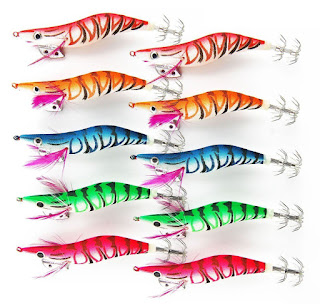

Plastic Hard Lure
  1)Hard Plastic Fishing Lures.
  2)5 Colors:Red,Pink,Orange,Green,Blue
  3)Size:3.5#
  4)Length: 13cm
  5)Weight: 27.6g/pc 
  6)Needle Sharp Stainless Steel Squid Hooks
  7)Quantity: 2pcs/color,10pcs/lot
  8)Packaging: PVC box


Plastic Hard Lure

 1)Hard Plastic Fishing Lures.
  2)10 Different Colors for each size
  3)Size & Length & Weight:
        2.5#: 10cm (11.2g)
  4)Random Colors
  5)Needle Sharp Stainless Steel Squid Hooks
  6Quantity: 1pcs/color,10pcs/lot for each size.
  7)Packaging: PVC box


2. Metal Lure
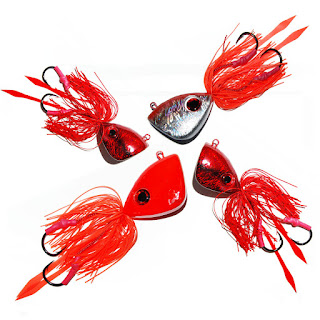
Metal Lure

Lead Head Jig Lure with Rubber Skirts 
1)Colors Random!!!
2)Weight: 250g
3)Quantity: 2pcs/lot
4)Perfect Skirts for Lifelike Action
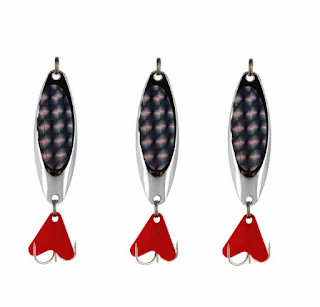
Metal Lure
1) Weight: 20g/pc
2) Hook Size: 6#
3)  Package: 10pcs/lot
4) Smooth and rapid diving actions.
5) Creates life-like swimming actions in water.
6)  Durable material contributing to long service life.
7) Suitable for different kinds of fishes, wonderful tool for fishing lovers.

3. Plastic Soft Lure
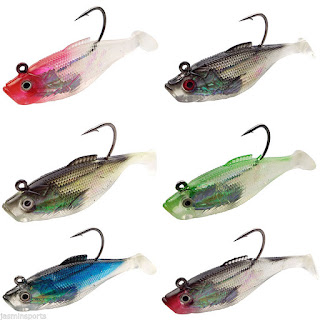
Plastic Soft Lure

1)Size & Weight:
   2''(6cm): 2.7g/pc
   3''(8cm): 13.6g/pc
   4''(10cm): 27.5g/pc
2) Quantity: 6Pcs/bag swim shad baits per size
3)Sporting strong soft bodies with internal real lead heads, laser light and mustad Hooks
4) Super-soft hand-poured bodies that are so lifelike, you might be tempted to take a bite yourself
5) An excellent holographic and crazy 3-D WildEye stare and life-like swimming action
6)Internally weighted for perfect depth control, which rigged and ready with premium, extra sharp hooks

Plastic Soft Lure
1)Material: PVC soft frog,Stainless Steel Hook
2)Length: 9cm 3.54"   Weight:6.2g
3)Smooth and Rapid Diving Action
4)Quantity: 8cs/lot
5) Color Random 
6)Packaging: OPP bag package
7)The Unique Keel Shaped Design Makes This Frog Walk Over Open Water with Ease. 
The Soft Body And Hook Placement Gives This Frog One of The Deepest Hook Gaps of Any Frog On The Market.

4. Octopus Skirt Lure
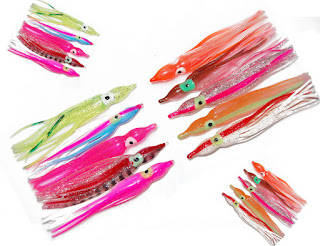
Octopus Skirt Lure

 1)Top Quality
 2)Material:Soft PVC
 3)Length: 9cm
 4)100% Satisfaction
 5) No Plastic Smell and Good for health
 6)Made by High Quality Environmental Protection Material

5. Worm Bait
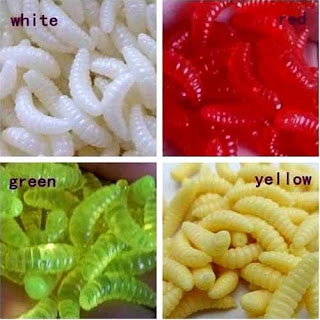
Worm Bait

Soft Plastic Grub Lures
1) size: 2.2cm 0.45g
2)mixed color:
  white worm :50pcs 
  red worm :50pcs 
  green worm :50pcs 
  yellow worm:50pcs
you can get totally 200pcs

 6.Sabiki Rig  

Sabiki Rig
1)Hook Size: #5/0
2)Branch: 30, Test/Dia: 1bs/0.40mm
3)Main: 40, Test/Dia: 1bs/0.50mm
4) Package: 5packs, 2pcs/bag, 2*5bags=10pcs total
5)Random Color!!! 


2016年12月12日星期一

How to Fix Your Fishing Reel?

There are many potential problems can be happened to the fishing reels, and it is impossible to send them to the repair shop every time. So, if you love fishing very much, you’d better learn how to solve these problems by yourself.
As Chinese strategist Sun Tzu said:” Know yourself and know your enemy, you’ll win every war.” This sentence can be used in repairing fishing reel. Only when you know how it works, then you can know how to fix it.
 fishing reel


How Does Fishing Reels Work?

Fishing line passes through a rotor that spins around a stationary spool, wrapping the line as it goes. To lay line evenly, the spool is mounted on a shaft that moves up and down as the spool spins. The angler lifts the bail wire mounted on the rotor and holds the line in place with his index finger to make a cast. After casting, the bail wire is closed with the line under it, and the rotor can lay line on the spool again.
             
fishing reel

What Can Go Wrong with a Fishing Reel and how to Fix It?

1. Line twist

Line twist is the most common problem in fishing, most fishermen must have met it before. It can be caused by several reasons such as long-term general use. If you have line twist, the best way is to strip off the old line and apply new with a professional machine for a tight and uniform wind.

2. The size of line

The fishing line can be divided into several types by the size. And when you choose the fishing line, please remember that the size of the line should match to the fishing reels. Many problems are just caused by the wrong size fishing line. If you don’t know how to select the line, you can tell the sellers your reel’s model or bring you reel to the shop.

3. Bail spring

Many fishermen complain about that the reel bail doesn’t spring back when fishing, and when the return spring fails to flip the bail back open, the bail springs are likely damaged.
Bail springs are simple and inexpensive to replace. If you have an older model reel, replacement parts can be difficult to find, but usually a reel repair expert can recommend a good substitute.

4. Braided Line slippage

Nowadays, more and more fishermen prefer to use the braided line because of its high knot strength, lack of stretch, and great overall power in relation to its diameter. But new users may not know that the slick line does not adhere easily to the spool. Braided line requires some anchoring for the highest performance.

  In order to avoid this problem, you can apply a backing directly onto the reel to serve as a grip for braided line. You can use a few wraps of monofilament line on the base of the spool before you wrap the braided line, or use electrical tape. Both options provide easy backing to prevent line slippage


2016年12月9日星期五

How to Maintain Your Fishing Rod?

For many things, the new is better than the old, but the fishing rod is not. Experienced fishermen prefer to use the old fishing rods because they are accustomed to them, so they will always pay much attention to maintain their fishing rods. Besides, maintain the fishing rod regularly can also help them save the money of buying new fishing rods. But many beginners know less about it, and they just put the fishing rod back without any cleaning or maintaining after fishing. This is really a bad habit, and it will shorten the service life of the fishing rod. Then how to get the most out of your fishing rods?
 fishing rod
1. Read the instructions carefully
There will have an instruction when you buy a fishing tackle, what you need do before fishing is read it carefully. As we all know, different rods have different sizes, shapes and materials, so the maintenance of them should also be different. The instructions will tell you some information about the rod, like how to install it, how to clean it and what should be avoided when using it.      
 fishing rod

2. The common ways of maintaining
There are some common sense of maintaining the fishing rods, and you can’t see them from the instruction.
a. Fishing rods must be handled with care. If you don’t take care about this
point, your fishing rods are easy to be broken.
b. If you are fishing in a sunny day, don’t put your rods into the bag or box
immediately after fishing. The rod will become very dry after the sunlight exposure, what you should do is wiping the rod with wet cloth, and wait at least one night. Then, you can put it back.
c. If you are fishing in a rainy day, you must use a dry cloth to wipe away the
water, the put the rod into an airy place for one night. Please make sure that your rod is dry enough when you put it back.
d. When you clean the rod, don’t use the organic matter such as gasoline,
thinner and alcohol. These liquid will corrode your rod.
e. Wax your fishing rod regularly. It will smooth the rod and make it becomes
better when use.

fishing rod

3. The storage of fishing rod
Storage is also an important part of maintenance .Store your fishing rod in a proper rod storage rack that keeps your rods from curving and the components from bumping against each other. Avoid leaning your rods up against each other and storing them upright in a corner of your garage -- the reels, blanks, guides and tips are much more susceptible to damage when stored that way. 

A beard well lathered is half shaved. There's nothing more frustrating than losing a trophy fish due to a broken rod tip when the situation could have been prevented. Now you can pick up you fishing rod, and enjoy the process of maintaining it.


2016年12月8日星期四

How to Tie a Fishing Hook?

If you ask a fisherman what they can’t buy for fishing, most of them may tell you that a good knot is one thing that they can’t buy. For beginners, learn to tie the fishing hooks is a basic work, but it is not easy at all, people should be careful and patient enough. As we all know, if you can’t tie a good knot, the fishing line and the hook will be separated easily when there is a fish on the hook. Then, how to tie some beautiful and strong knots.
1. Clinch knots
Clinch knot is one of the most common fishing knots when fishing. It provides a good method of securing a fishing line to a hook, lure, or swivel. Tying a clinch knot is simple:
 1)  Insert the end of the line through the eye of the hook;
 2)  Pull about 6 inches of line through and double it back against itself. Then wrap
the end of the line around the line (going back to the reel) four to six times.
 3)  Make the knot. Pass end of the line through the small loop formed just above
the eye, then through the big loop just created. Be careful that the coils don’t overlap.
 4) Pull it tight. A little moisture here helps a lot. Wet it in your mouth to provide
some lubrication.

2. Palomar knots
Palomar knot is also a simple fishing knot, and it is best for use with braided fishing line and can looks pretty tricky. Here are the steps of tying a Palomar knots.
1) Double six inches of line and pass the doubled line through the eye of the
hook.
2) Tie a simple overhand knot in the doubled line, letting the hook hang loose.
Avoid twisting the lines.
3) Slide the doubled line under the hook and back up, above the eye of the hook.
4) Moisten and pull both ends of the line to draw up the knot. Trim excess. 

3. Orvis knots
The Orvis knot is ideal for tying on rig clips, and snood clips. One good reason to use the Orvis Knot is that it is easy to control the length of the rig or leader. Tying such a knot is not hard.
1) Pass the end of the tippet through the eye of the hook, then round the tippet
and back through the loop that you have just made.
2) Take the tag end and wrap it round the second loop twice.
3)  Lubricate and tighten the knot. 
4)  Finish by trimming the tag end. 

Many beginners think tying the fishing hook is very hard and boring, but practice makes perfect. As long as you often do this job, it will be very easy for you, and you can even try some more complicated methods.

At the end of this article, I have to remind you that please be careful when you tie a fishing hook, it is very sharp and sometimes can be dangerous.